
Cherry
Cherry deepens with light. A piece that leaves the workshop a pale honey will be a warm russet within five years and richer still a decade on. That change is not something to be managed; it is the reason to choose cherry in the first place.
Home / Timber & Finishes
The species decides how a piece ages. The finish decides how it reads on the day it arrives. Nineteen colors and four surface treatments, any of which can be laid over any of the timbers below.
Begin Here
Color can be matched across timbers. Grain, figure, and the way a board carries itself through twenty years of afternoon light cannot.
Cherry deepens with light. A piece that leaves the workshop a pale honey will be a warm russet within five years and richer still a decade on. That change is not something to be managed; it is the reason to choose cherry in the first place.
Tiger maple, to the people who work it. The figure runs across the grain and shifts as you move past it, so the surface is never quite the same twice in one afternoon. It is selected board by board, because figure cannot be ordered to specification.
Open-grained, hard-wearing, and honest. Oak carries the historical and charred treatments better than anything else on the rack, which is why so much of the painted work begins with it.
Walnut, poplar for painted work, and other species can be sourced on request. Ask when you write, and we will tell you what it does to the timing.
The Colors
Select a color to see it at size. The historical colors are laid over a red ground, so the red reads through at the edges and corners as the surface is lived with.
Surface Treatments
A grain figure worked into wet paint by hand, the way country painters once imitated timbers costlier than the ones they had.
Wear placed where wear would honestly fall: the leading edge of a drawer, the arm of a chair, the front of a stretcher where boot heels have rested.
Color laid over a red historical ground, so the red reads through at the corners and edges as the surface is used.
The same layered method over a natural ground, for a lighter and quieter result.
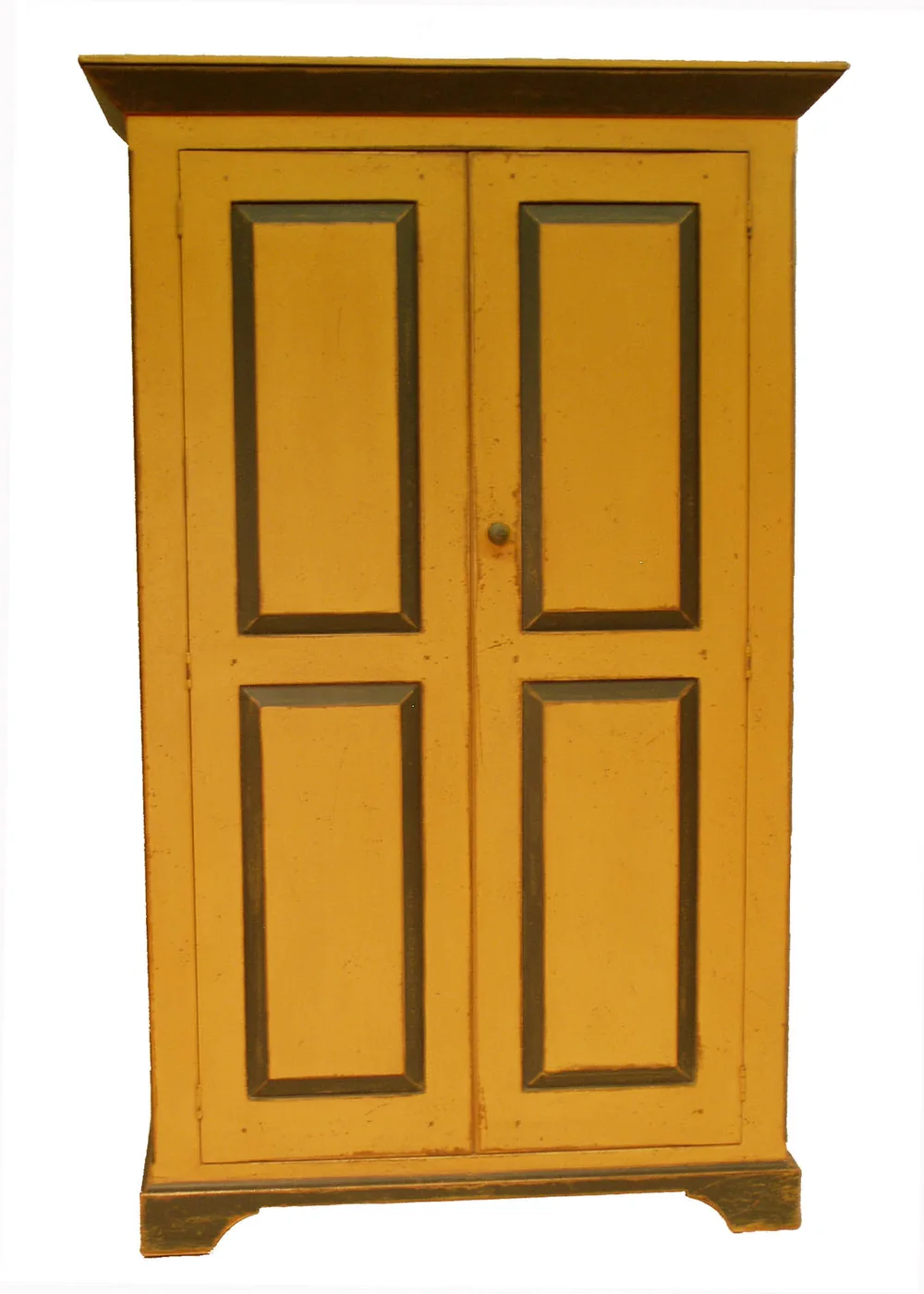
A Worked Example
The cupboard alongside is painted in mustard laid over red, then distressed at the door edges, the corners of the cornice, and the front of the base molding. Those are precisely the places two centuries of use would have worn, which is the whole reason for putting the wear there deliberately.
The pinstriping on the panels is drawn by hand after the distressing rather than before. Done the other way round, the lines read as printed on, and the eye catches it immediately even when it cannot say why.
Talk a finish throughTell us which colors you are weighing against one another, and on which timber. Physical samples are sent without charge.
Request samples