
Home / Our Craft
Our Craft
Mike and Chris Benner trained in the reproduction of eighteenth and nineteenth century American furniture before opening this workshop in Lebanon, Ohio. The methods have changed very little since. The machinery has.
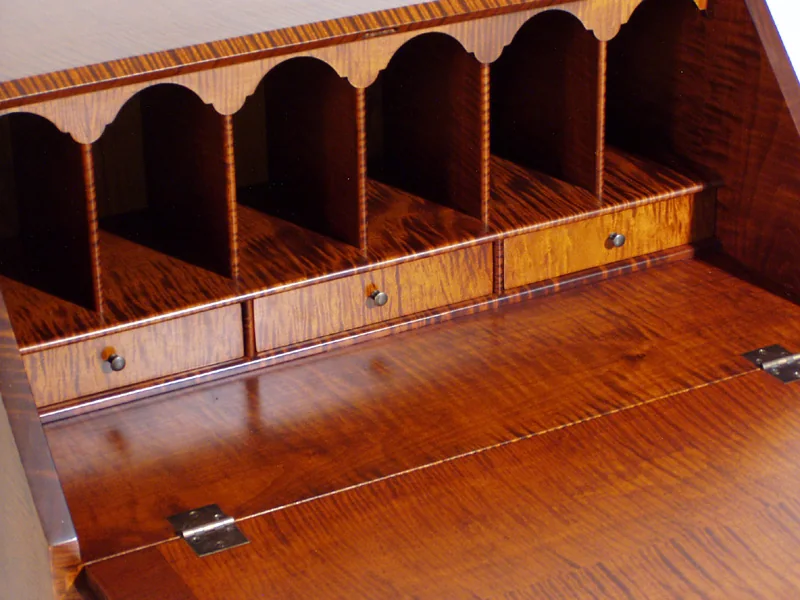
The Founding Premise
A deliberate turn away from furniture built to be replaced.
This workshop began from a straightforward conviction: that the pieces we live with every day ought to bring a kind of grounding calm to the rooms they stand in, and that furniture built to a fashion cycle can never quite manage it.
There is a version of this trade that treats machinery as a betrayal, and another that treats hand work as theater. Neither is much help to someone who simply wants a table that lasts. Good hardwood and current equipment bring stock flat, square, and to dimension more accurately than a hand plane will. The joints are then cut the traditional way, because a mortise-and-tenon frame and a hand-dovetailed drawer genuinely outlive the alternatives. That combination is the whole approach.
At the Bench
How a piece comes together.
The smell of planed cherry. The particular quiet of fitting a dovetail until it goes home under hand pressure alone. The patience a brushed finish asks for between coats.
- 01
Selection
Boards come off the rack and are sorted for grain and color, so the figure in one drawer front carries into the one beneath it. Nothing is cut to length until the piece has been laid out in the rough.
- 02
Milling
Stock is flattened, thicknessed, and brought to final dimension. Wood is a living material that moves with the season, so parts are milled close to the day they are joined.
- 03
Joinery
Mortise-and-tenon for the frames, hand-cut dovetails for drawers and chests. The joint carries the load, which is why drawers cut this way still run two centuries on.
- 04
Assembly
Dry-fitted first, then glued and drawn square in the clamps. Turnings and steam-bent parts are made here at the bench rather than bought in.
- 05
Finishing
Sanded through the grits, colored by hand, and topcoated in a dust-free room so nothing settles into the film. The finish is made to be lived on and touched up, not preserved under glass.
Why It Matters
A drawer is opened forty thousand times.
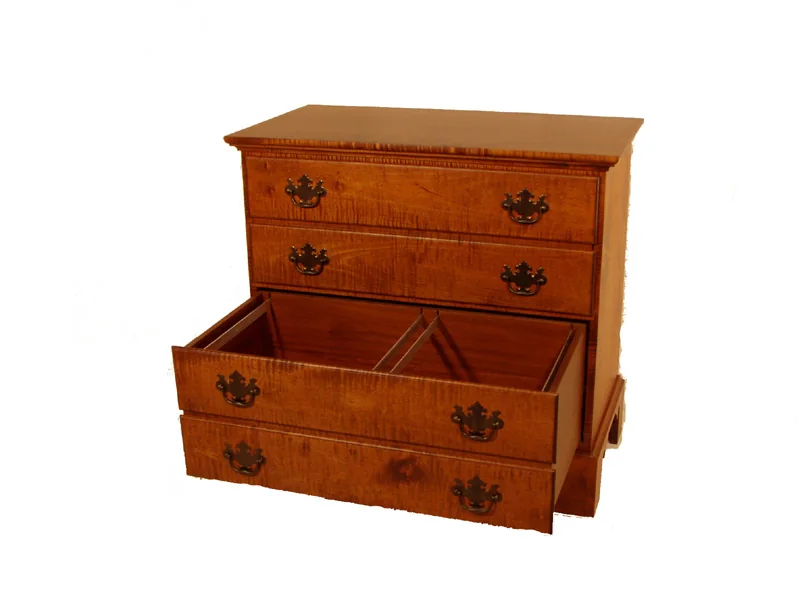
Over the life of a chest, a drawer front is drawn out tens of thousands of times, and every one of those pulls works to separate the front from the sides. A machine-cut box joint resists that with glue surface alone. A hand-cut dovetail resists it with geometry: the pins simply cannot pass through the tails in the direction the drawer is pulled.
That is not nostalgia. It is the reason two-hundred-year-old drawers still run sweetly, and the reason the dovetails here are still cut one at a time.
Material Honesty
Timber that is meant to change.
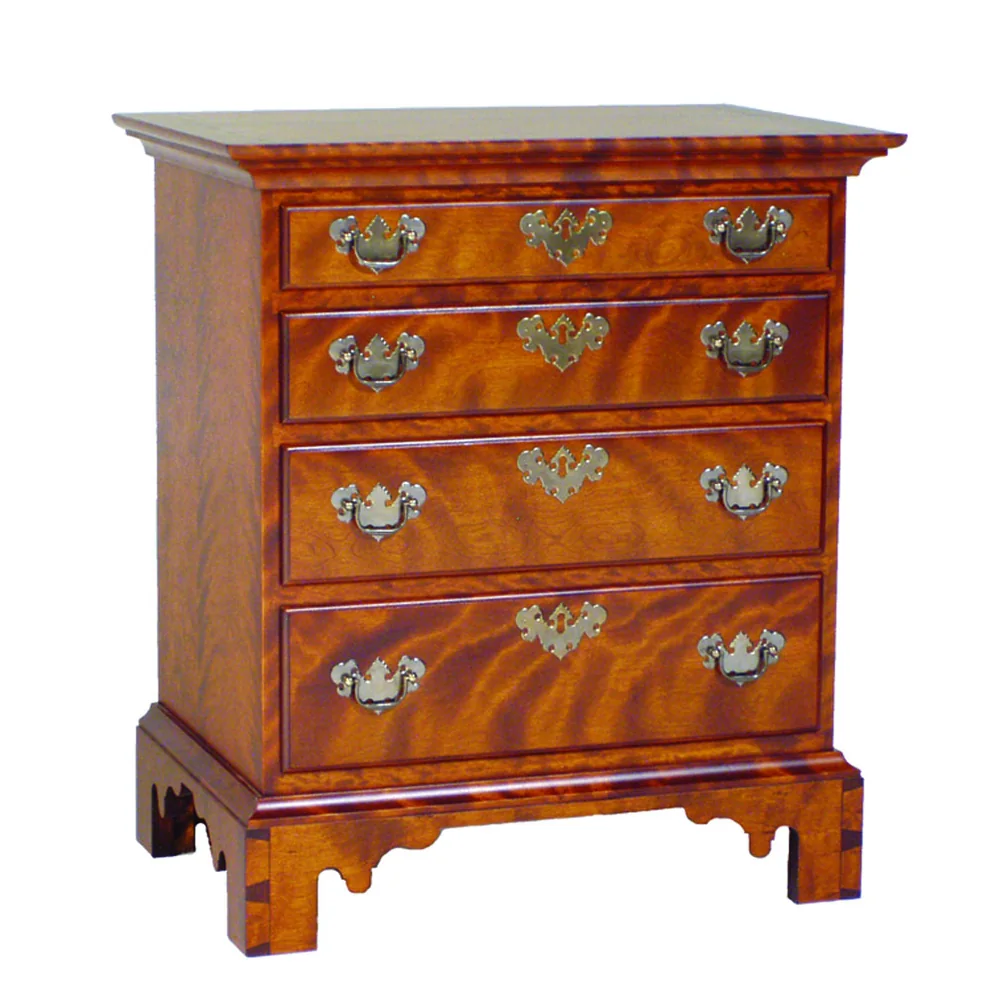
We work in solid hardwood because solid hardwood keeps improving. Cherry deepens toward russet under years of light. Hand-painted surfaces soften at the corners where hands actually land, and can be touched up in place across decades of family life rather than stripped and begun again.
Sustainability, in this trade, is mostly an outcome of craft: joinery considered carefully enough, and cut well enough, that nobody is ever moved to replace it.
“Furniture ought to make a sanctuary of the room it stands in. That is the work. Everything else is technique.”
The Journal
Notes on timber, joinery, and finish.
 Materials
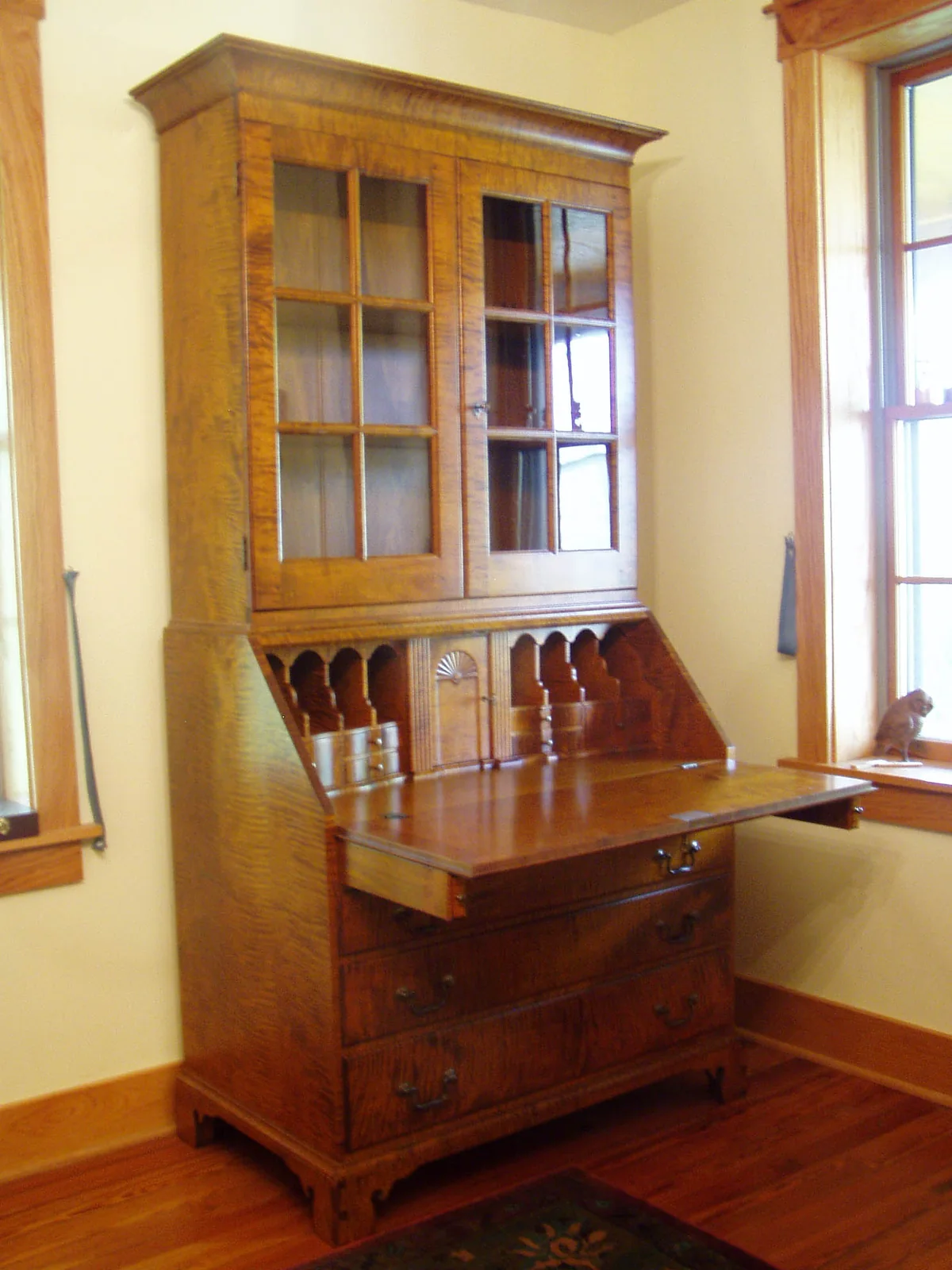
Choosing between cherry and curly maple
One deepens quietly for decades. The other is chosen board by board for a figure that never repeats. A note on how to decide between them before the first cut.
At the Bench
Why the dovetails are still cut by hand
A jig is faster and, on a drawer that will be opened forty thousand times, measurably weaker. What that difference looks like at the bench.
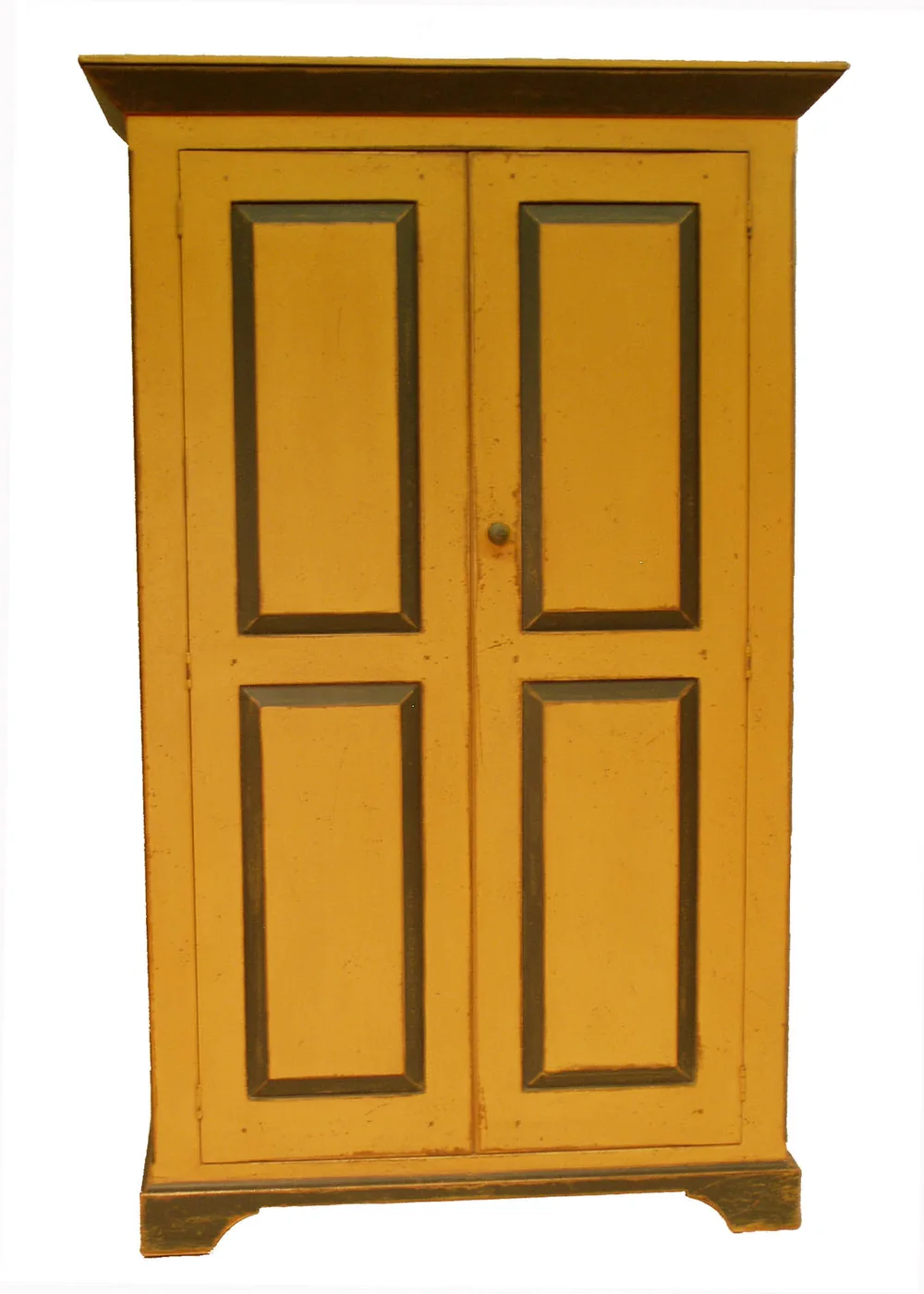 Finishes
What historical means on a finish card
Nineteen colors, four surface treatments, and a red ground that shows through at the wear points. A walk through the finish library.
Sample articles, to be replaced with the workshop's own writing.